Sign up for updates on upcoming trainings and opportunities

Community-Driven Climate Resilience Planning Curriculum

A New Tool for Practitioners

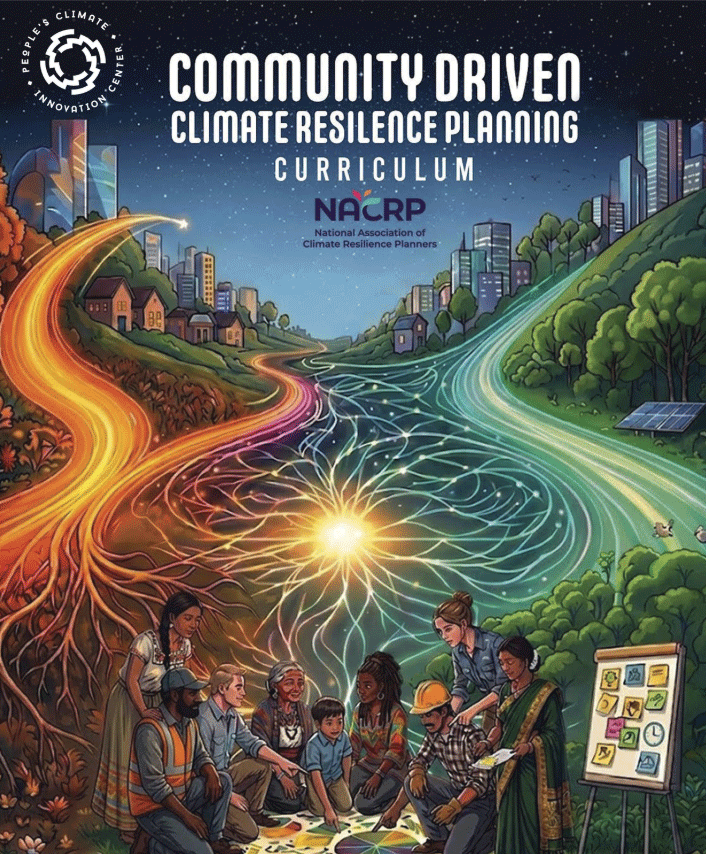
Based on the Community-Driven Climate Resilience Planning Framework, the Community-Driven Climate Resilience Planning Curriculum seeks to engage community leaders, government, philanthropy, academia, and other partners to strengthen how they work together within complex partnerships during community-driven planning processes.

Through three connected modules, participants build alignment, assess readiness, and develop the capacity to sustain long-term efforts—learning to navigate power dynamics, clarify roles, and respond to real-world conditions as they emerge. Grounded in nature-based metaphors, embodiment practices, and interactive activities, this training helps communities move from intention to action, and from planning to long-lasting impact.
Sign-Up

Modules

MODULE 1

Problems are Connected & So are the Solutions

Alignment
Read more >
Just as healthy soil is needed for anything to grow, successful community-driven planning processes need participants open to operating with a shared understanding, trust and clarity about the challenges they face. Module one introduces the core principle that problems and solutions are interconnected. In this section, participants begin examining what lies beneath the surface through systems thinking, lived experience, and root cause exploration. Together, groups develop a shared analysis, strengthen alignment, and create the foundation needed for meaningful solutions to take root and grow.
MODULE 2

The Guiding Principles

Readiness

Read more >
Like mycelium moves nutrients and information underground, community-driven planning processes help participants develop a deep understanding of how power, resources and relationships flow. Module two utilizes interactive activities and role-playing to support participants' exploration of how power is exercised, relationships are built, and decisions are made. Together, they assess their readiness to move forward sustainably, identifying the strengths, gaps, and conditions needed to align their efforts with the guiding principles of community-driven planning.
MODULE 3

The Essential Components

Capacity Building
Read more >
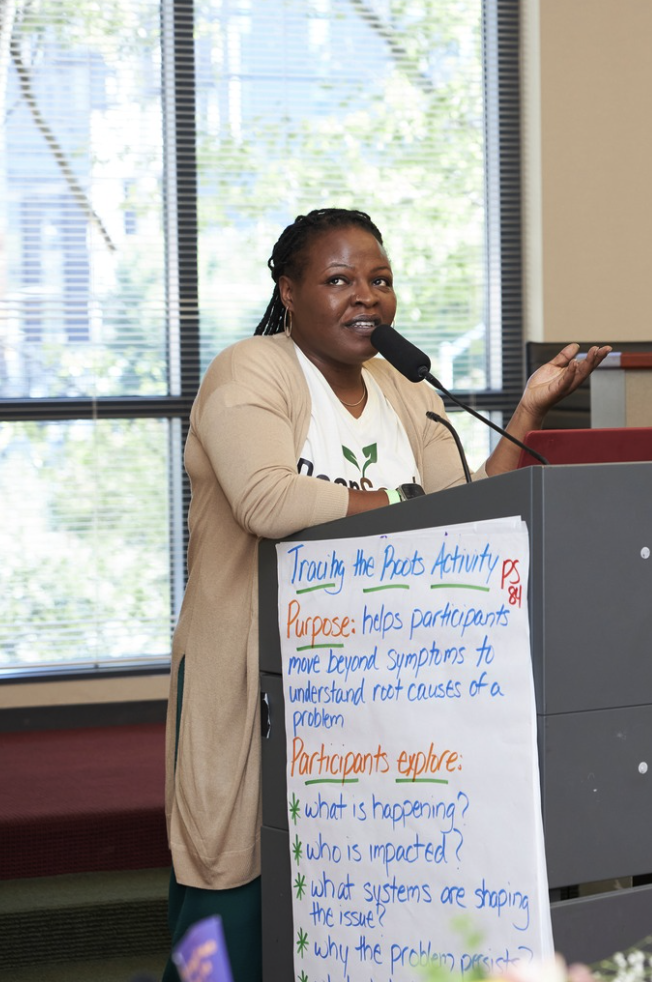
Like a forest that grows, adapts, and sustains itself over time, the community-driven planning process ensures that participants are equipped with essential skills and components that sustain the work. Module three builds on the first two modules, and participants strengthen their capacity to respond to real-world conditions. Together, groups learn how to cultivate the right structures, relationships, and resources that support long lasting resilience and transformation.

Curriculum Pathways

Facilitator Training

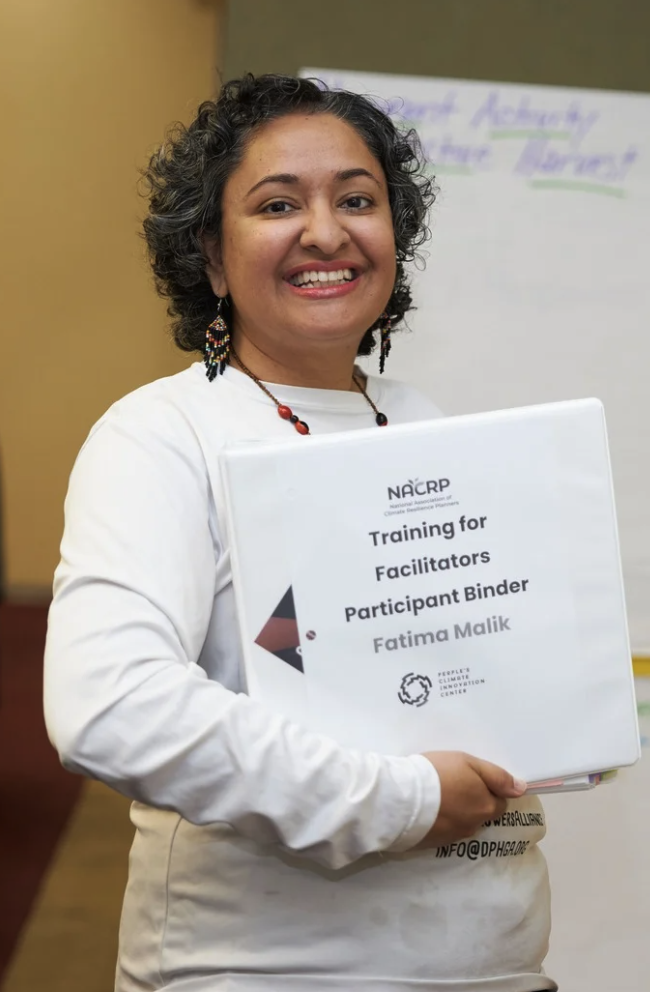
This pathway follows a train-the-trainer model and is designed for facilitators who are looking to expand their practice and deploy the curriculum in their own communities or as part of NACRP’s Facilitator Referral Network.

Participant Training

The participant training pathway is designed for groups of stakeholders seeking to build alignment, readiness, and collective capacity for long-term community-driven planning processes. It is especially relevant for multi-stakeholder groups, including community residents, nonprofits, government agencies, philanthropy, academia, and other partners who are seeking tools and shared practices to develop, navigate and/or sustain planning processes more collaboratively, equitably, and sustainably.

"I learned the importance of intentionally recognizing signals of readiness (or lack of readiness) to assess where a group is and how it's progressing. I also appreciated using sample scenarios and worksheets to practice and break down each tool before applying it.” Danielle Jones, Certified Facilitator

This curriculum is for you if...

You are currently participating in a community-driven planning process and want to strengthen collaboration, alignment, and long-term impact

You are involved in a planning process that is not community-driven and recognize that an intervention or shift in approach is needed.

You are thinking about launching a community-driven planning process and want to build a stronger foundation before getting started.

Your community was engaged in a planning process that stalled or lost momentum, and you are exploring how to move forward.

Your community completed a planning process that did not meaningfully engage residents and was never fully implemented.
“As a public sector employee, I see this curriculum as an invaluable tool for helping my peers better understand and embody the perspectives and concerns of community leaders. It also challenges us to examine our own assumptions, recognize areas for growth, and think critically about how we can genuinely share and redistribute power so communities can truly lead.” Justina Thompson, Certified Facilitator

Frequently Asked Questions

What will participants learn through this curriculum?
This curriculum was developed in response to the growing desire to better connect with and apply the concepts and approaches in the Community-Driven Climate Resilience Planning Framework (a tool of tools). It seeks to support community leaders, government, philanthropy, academia, and other partners in starting or strengthening collaboration through community-driven planning. There are currently three connected modules for participants to build alignment, assess readiness, and develop the capacity to sustain long-term efforts; navigating power dynamics, clarifying roles, and responding to real-world conditions as they emerge. Grounded in nature-based metaphors, embodiment practices, and interactive activities, this training helps communities move from intention to action, and from planning to lasting impact. 
Who is this curriculum intended for? 
This curriculum is designed for practitioners who are developing, advocating for, or implementing climate solutions with and alongside communities most impacted by climate change, who recognize the importance of meaningful, multi-stakeholder collaboration. It is especially relevant for those working to strengthen alignment and readiness among community residents, community-based organizations, academic institutions, philanthropic partners, local government and public-sector agencies, and other key stakeholders, including small businesses, cooperatives, labor unions, and more. 
How much does it cost to participate in a training? 
Training costs are sliding scale and may vary depending on the type of training location, duration, and level of support provided. Please reach out to nacrp@climateinnovation.net for more information.
How can my organization get involved?
If you are interested in participating in a future training, bringing the curriculum to your community or organization, or exploring a partnership, we encourage you to complete our interest form so we can stay in touch and notify you about upcoming opportunities.
How can I access the Community-Driven Planning Curriculum?
Access to the Community-Driven Planning Curriculum is provided through an annual curriculum license fee. A license grants individuals or organizations access to the curriculum materials and tools for one year, in accordance with these terms and conditions.

To support accessibility, Climate Innovation offers a sliding-scale licensing structure. Organizations purchase a license based on their annual operating budget, while individuals are encouraged to select a licensing tier that reflects their annual income and purchasing power.
  • Grassroots organizations (annual budgets under $1M)
  • Under $250,000 budget: $250
  • $250,000 - $500,000: $500
  • $500,000 - 1M: $1,500
    (Waiver or reduction available at Climate Innovation's discretion)
  • Community-based organizations or coalitions (annual budget $1M–$5M): $3,000
  • Mid-sized nonprofits (annual budget $5M–$10M): $5,000
  • Large or regional non-profits (annual budget $10–$20M): $7,500 
  • National nonprofits, government agencies, philanthropic institutions, or universities (annual budget over $20M): $10,000
The curriculum license must be renewed annually to maintain access beyond the initial one-year period. The one-year term begins on the date access to the materials was originally granted, as stated in the invoice or order form.
What does the licensing fee support?
The development of this curriculum reflects the time, expertise, and lived experience of curriculum consultants, advisors, NACRP members, and Climate Innovation staff who collaborated to fully design and refine each module.

The licensing fee helps sustain the significant investment made to develop the curriculum and supports its ongoing stewardship. It also allows us to continue offering trainings, maintaining and improving the materials, and expanding access to community-driven planning tools that help advance a broader shift away from traditional top-down planning approaches.

In addition, the licensing structure helps protect the integrity, intellectual property, and responsible use of the curriculum materials and tools, ensuring they are used in alignment with NACRP’s community-driven planning principles, including accountability to frontline communities, equitable partnerships, transparency, community ownership, and ethical facilitation.
Who needs to pay the licensing fee?
Individuals, organizations, institutions, and local governments that wish to access and use the curriculum materials are asked to pay an annual licensing fee, regardless of whether they are being trained as facilitators or participants.
I am a NACRP Member. Do I also have to pay a licensing fee to access the curriculum materials?
Yes. While NACRP membership offers many benefits, access to the curriculum materials is not included and requires a separate annual licensing fee. This structure helps sustain the development, stewardship, and protection of the curriculum over time.
Are payment plans available to access the curriculum?
Climate Innovation may offer payment plans (e.g., biannual or quarterly) upon request. However, access to the curriculum materials will be granted only after payment is made in full. 
Can multiple people from the same organization use the materials?
Yes. If an organization purchases the license, multiple staff members may access and use the materials.

If the license is purchased by an individual, access is limited to that individual.
What if I want to access the curriculum as an individual (not through an organization)?
Individuals who wish to access the curriculum outside of an organization or institution are encouraged to select a payment level that reflects their annual income and purchasing power.

Our goal is to keep access flexible while maintaining fairness across different users.
Can I use the curriculum in paid trainings or consulting work?
Yes, licensed users may use the curriculum in paid trainings or consulting engagements.

We strongly encourage participation in a NACRP Facilitator Training to ensure you are well-equipped to facilitate the curriculum with care, skill, and alignment with its core principles.
If I work at a university or institution, but I purchased an individual license, can I still use the curriculum there?
Yes. If you are facilitating the training independently as a consultant or practitioner, an individual license allows you to use and deploy the curriculum, including within university or institutional spaces.

However, if the training is being offered, sponsored, hosted, funded, or formally organized by the university or institution itself, then the institution is expected to purchase the appropriate organizational license based on its operating budget.

This distinction helps ensure that larger institutions leading broader implementation also contribute to the long-term stewardship, sustainability, and accessibility of the curriculum.
I have completed (or plan to complete) the Facilitator Training. What opportunities are available to me moving forward?
Facilitators trained through NACRP who have purchased an annual curriculum license may use the curriculum to support partnerships, collaborations, workshops, and community-based trainings, either in collaboration with People’s Climate Innovation Center or independently at their discretion.
  • Facilitating with Climate Innovation: You may be invited to facilitate or co-facilitate NACRP-led trainings to advance community-driven climate resilience efforts. When facilitation support is requested by Climate Innovation, compensation will be provided based on available resources and an agreed-upon scope of work.
  • Facilitator Referral Network: Your facilitation skills may be shared through NACRP’s Facilitator Referral Network. In these cases, you may be referred or connected directly with interested organizations to determine fit, scope, and terms. NACRP may follow up to support alignment and gather feedback on the matchmaking process.
  • Independent engagements: You may also be contacted directly by organizations outside of Climate Innovation’s network to facilitate trainings using the curriculum, in alignment with NACRP’s values and guidelines.

This FAQ is a living document and may continue to evolve as the curriculum, pricing structure, payment systems, and training opportunities are further refined. We will continue updating this document as new information becomes available. Last updated: June 29, 2026

Fees

Curriculum Accessibility for Facilitators

Organizations or individuals must purchase an annual licensing fee to access the curriculum materials. Climate Innovation has designed a sliding scale based on annual operating budget ranging from $250 - $10,000.

Training Pricing for Participants

Training costs are sliding scale and may vary depending on the type of training location, duration, and level of support provided. Please reach out to nacrp@climateinnovation.net for more information.

SUGGESTIONS & QUESTIONS

Share Your Interest

Please complete our form or email us!

Complete Interest Form